- News
- entertainment
- hindi
- bollywood
- Psycho turns 50!
Trending
This story is from June 19, 2010
Psycho turns 50!
Alfred Hitchcock’s ‘Psycho’, the thriller that achieved iconic status and spawned hundreds of imitations, turned 50 on June 16. TOI-Crest pays tribute to the path-breaking movie and its peerless maker
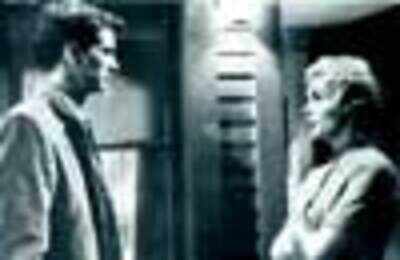
No one had ever been afraid to take a shower before 1960 till Alfred Hitchcock’s Psycho turned a daily bathing ritual into a perfect setting for a murder. Even though the horror film turns 50 this year, and though we’ve watched innumerable films of the same genre subsequently, it continues to remain etched in every film buff’s consciousness.

My earliest memory of Psycho is about the buzz around it in my home and school. People would talk excitedly about the film and dare one another to watch it alone. More than two decades later, I saw a poster of Psycho-2, the sequel. I still remember the psycho house in silhouette on the poster and the tagline: ‘It’s 22 years later and Norman Bates is coming home.’ I remember thinking at that time about the brilliance of a film which had acquired such cult status that even 22 years later, everyone remembered the psycho house and its infamous owner. And here we are now in 2010 still talking about it.
It is easy to underestimate the technical wizardry and story-telling genius when we watch Psycho today. So many hundreds, perhaps thousands, of clones have been made of both Psycho and its scenes that the original itself could well appear sometimes like a caricaturish clone.
The making of Psycho went through its fair share of problems, which included reshoots till the last minute, horrific trouble with the censors and complete rejection from some critics. But 50 years later, it remains the most iconic serial killer flick of all times.
Psycho begins with a racy intimate moment between Janet Leigh and Sam Loomis till Janet lands in the lonely, wayside Bates Motel and meets the sole human being there, the hotel’s proprietor Norman Bates (Anthony Perkins). Then comes the blood and gore, the iconic shower scene. What begins as a simple movie with an overtone of desperation in love turns into the chilling story of a psychotic killer.
After only 45 minutes, Hitchcock kills off the protagonist, played by the most saleable star of the film, Janet Leigh. To get rid of a character with whom the audience had become well acquainted and who they would expect to hang around until the end of the film had no precedent in mainstream cinema, but the way Hitchcock sewed the story around the strange motel owner and his even stranger relationship with his mother proved once and for all that it could be done and that there are no rules for cinema. Psycho set the agenda for slasher films, which now don’t really begin until a pretty girl with a problem has been killed in the most imaginative of circumstances.
The way in which Hitchcock handled violence in Psycho was a revolution of its own kind. Never before had the full energy and murderous vigour of a knife attack, or any killing for that matter, been committed in such a way on celluloid — and though it would have been an outrage to say it at the time, Hitchcock was using every trick in his cinematic book, along with Bernard Herrmann's frightening music, to make his audience celebrate the macabre majesty of a life being taken.
Intrigued by Hitchcock’s insistence that cinegoers not be admitted after the film had started, queues across the world stretched for blocks and box-office records were smashed everywhere. Psycho picked up four Oscar nominations and is now regarded by critics, theorists and film fans alike as one of the finest and scariest films ever made.
In his characteristic style, Hitchcock undersold his own genius and belittled the numerous books that were subsequently written intellectualising his film by saying that Psycho was a film “made with quite a sense of amusement on my part”. “To me it’s a fun picture,” he said. “The processes through which we take the audience, you see, it’s rather like taking them through the haunted house at the fair ground.”
The iconic shower scene where Anthony Perkins murders Marion by multiple stabs has never really been replicated in terms of the tremendous effect it created at the time. Shot from multiple camera angles, the sequence was put together with one hell of a lot of cuts. So much violence had never been seen in mainstream Hollywood films till then — but it was supremely effective, its brutality conveying the messedup mind of Norman Bates like nothing else.
But contrary to popular opinion, the second murder remains much more chilling for me. The sequence is pacy, and the split second in which the murder happens, coupled with the heart-stopping music, heightens the trauma of viewers more than the celebrated shower scene. The combination of the haunted villa, the element of rain and Norman Bates remains unmatched till today.
Film experts have pondered on whether Hitchcock unleashed the mayhem of violence with his masterpiece or was merely reflecting on an increasingly violent country. Whatever the outcome of that debate, the scarily wonderful thing about Psycho is that it mothered a genre which, for 50 years, has spawned thousands of offspring in numerous languages across the world. Perhaps, even when we are all dead and gone, Psycho, that horrific mother of all thrillers, will live on.
Follow us on Twitter for more stories
End of Article
FOLLOW US ON SOCIAL MEDIA







Photostories
entertainment videos

Featured In Movies
Popular Categories
Entertainment NewsBollywood NewsTollywood NewsKollywood NewsMollywood NewsMovie ReviewsLatest Hindi MoviesLatest Tamil MoviesMX PlayerParenting TipsHome RemediesWeight LossBeauty TipsParenting TipsHindi VideosHindi Video SongsBhojpuri Music VideosLatest Telugu MoviesBhojpuri Music VideoHindi TV News
Trending in Entertainment
Latest MoviesBollywood MoviesHollywood MoviesTamil Movies 2024Telugu Movies 2024Malayalam Movies 2024Kannada Movies 2024Marathi Movies 2024Bengali Movies 2024Top Rated Movies 2024Best Hindi MoviesBest English MoviesBest Telugu MoviesBest Tamil MoviesBest Malayalam MoviesBest Kannada MoviesBest Bengali MoviesUpcoming Hindi MoviesBest Movies Of All TimeBest Hindi Movies of All Time
Trending in Etimes
Horoscope TodayNumerology Predictions TodaySean Diddy MotherKarachi Airport ExplosionKamala HarrisPopulated Indian CitiesBelly FatHurricane MiltonSunita WilliamsDepression RiskNepal FloodBarbra StreisandSnoring Prevention TipsDonald TrumpElon MuskRelationship TipsLake Michigan DiscoveryRelationship TipsEkadashi in October 2024
Trending in TV
Trending in Lifestyle
Trending in Regional
Movie Reviews
Binny And Family ReviewLove, Sitara ReviewWill & Harper ReviewWolfs ReviewYudhra ReviewJo Tera Hai Woh Mera Hai ReviewKahan Shuru Kahan Khatam ReviewHis Three Daughters ReviewNever Let Go ReviewDancing Village: The Curse Begins ReviewTransformers One ReviewFirst Love ReviewBerlin ReviewThe Buckingham Murders Review
Upcoming Hindi Movies
Upcoming Regional Movies
Latest News
1st T20I: Dominant India make quick work of BangladeshWorld famous Corpus Clock: A time piece and a haunting work of artGhum Hai Kisikey Pyaar Meiin: Savi accuses Jigar of misbehaviourYouTube Shorts extends duration to 3 minutes5 must follow rules of Ayurveda to lose 5kg in 30 daysONGC Apprenticeship Recruitment 2024 registration begins: Check direct link hereWWE Hall of Famer Diamond Dallas Page signs new WWE Legends deal'Like a ghost': Manish Sisodia says Arvind Kejriwal has become PM Narendra Modi's 'sole obsession''Singham Again' Trailer: Ranveer Singh kisses wife Deepika Padukone's poster as she skips grand launch eventMy effort in internationalising Shatatantri Veena among the next generation seemingly paying dividends says Tarun Bhattacharya on his return from US TourOptical Illusion: Can you find who's the boss in this picture?'All teams will come to Pakistan for Champions Trophy': PCB chairman on India's participationDucking Below The WavesCoin Master free spins and coins for 7 October, 2024: Earn million of coins using today’s linkIndustry upbeat on policy continuity as business confidence index rises to 2-quarter high: CIISeized vehicles, weapons used by Hamas in October 7 attack on display in IsraelCleveland Browns coach Kevin Stefanski said the team is “not changing quarterbacks” after Deshaun Watson's poor performanceIT companies appraisal, hike cycles shift from June to September quarter
Other Group Sites -
ETimes is an Entertainment, TV & Lifestyle industrys promotional website and carries advertorials and native advertising.